Gerard Under Scholarship
Named after type designer and educator Dr. Gerard Unger (1942–2018), the scholarship celebrates creativity fused with functionality, and honors progress through fearless innovation, deep research, beauty, and goodwill.
About
Who can apply
The scholarship aim is to enable exceptional projects started during a course of study to be finalised and published commercially as soon as possible after the end of their course. The designer whose project is selected will receive feedback on their design and guidance from the entire TypeTogether team toward completing the family on a commercial basis.
Who can apply
Any current or graduated student either enrolled in or graduating from a typography course in the last two years who has fully or partially developed a type family (more than a single style) that includes, but is not limited to, the basic Latin alphabet.
How to submit
Once the submissions open, you can use the online form to make the process easier and more fair by anonymising submissions. In addition to some information about you and your project, we need to see visual material that showcases your typeface in the best possible way. Show us the best glyphs, how the design works in text, display, and headlines, and if you can, show examples of imagined uses. Don’t forget to include the current character set in every script, no matter how limited or advanced it might be.
Reward
The TypeTogether team provides ongoing mentoring in commercial, aesthetic, and technical aspects of font-making—from contractual terms through to release. The designer receives a publishing contract for the type family in TypeTogether’s retail library, featuring a 50% royalty rate (one of the highest in the industry), the ability to opt out at any time, and full retention of all rights and ownership.
The selected designer enters a five-month remote internship following graduation, with set weekly hours dedicated to developing their typeface under the team’s supervision. This includes €5,000 paid over the five-month period, plus up to €1,000 to attend a top-level typography or design conference. The internship balances the designer’s preferences with the project’s needs, all within a professional, supportive environment focused on learning and progress.
Commitment
We seek designers ready to embrace the process and create meaningful work. Submitting signifies entry into a professional commitment. You affirm that your typeface is an original work which does not infringe on the rights or design of another; that you originated the concept, were the sole designer, and all crediting is accurate; and that you have made every reasonable effort to understand the design category and to tangibly distinguish your work from others—revivals must either add to or meaningfully diverge from the historic design.
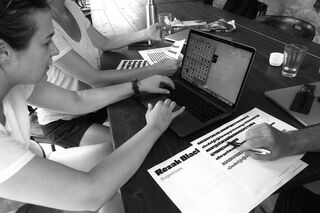
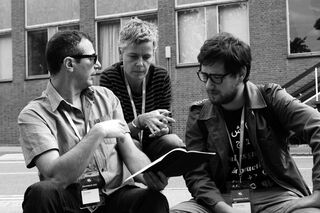
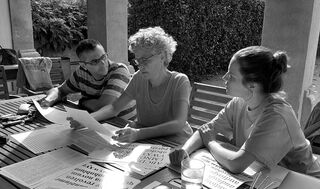

2025 Gerard Unger Scholarship results
We are happy to announce the winner of the 2025 Gerard Unger Scholarship: the Newz font family by Manau Quellec, created while studying at Ésad Amiens under the tutelage of Sébastien Morlighem.
Previous Winners
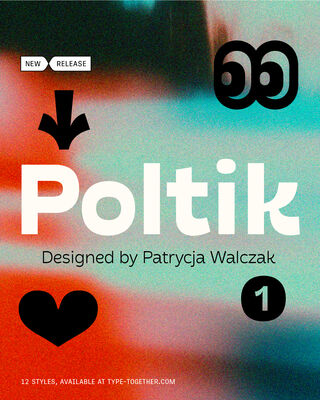
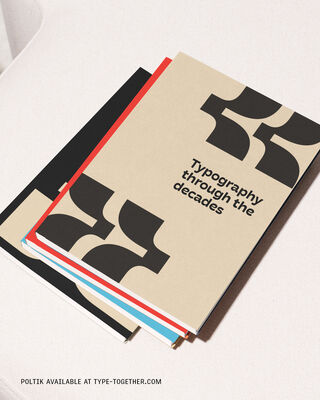
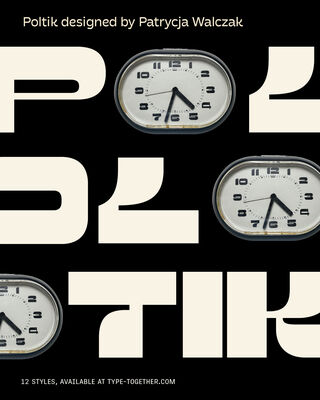
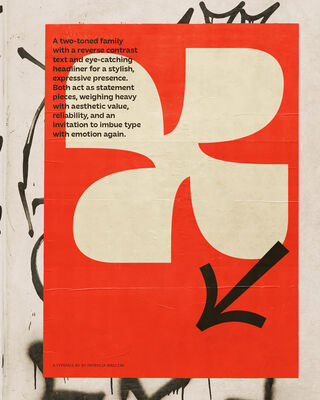
Poltik
Patrycja WalczakGUS Winner 2024


Ploquine
Emma MarichalGUS Winner 2024

Aeroplan
Nina FaulhaberGUS Winner 2023

Rezak
Anya DanilovaGUS Winner 2022

Rezak Cyrillic
Anya DanilovaGUS Winner 2022
Lektorat Display
Florian FecherGUS Winner 2020

Lektorat Text
Florian FecherGUS Winner 2020
Temeraire
Quentin SchmerberGUS Winner 2018
Noort
Juan BruceGUS Winner 2017
Noort Bengali
Juan BruceGUS Winner 2021
Bely
Roxane GataudGUS Winner 2016

Gerard Unger Scholarship
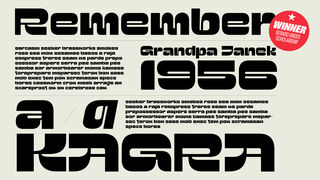
2023 Gerard Unger Scholarship results
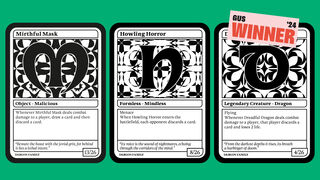
2024 Gerard Unger Scholarship results
2025 Gerard Unger Scholarship results
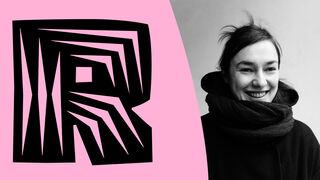
Anya Danilova: “No one achieves anything alone”
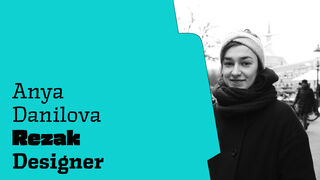
Anya Danilova: “No one achieves anything alone”
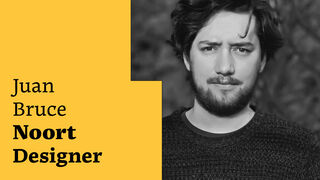
Interview with Juan Bruce

Anya Danilova, winner of the 6th Gerard Unger Scholarship
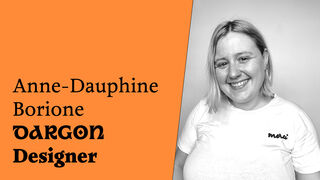
Anne-Dauphine Borione, the tenth recipient of the Gerard Unger Scholarship
Frequently Asked Questions
When submissions open you will be able to reach our online form which anonymises submissions to make the process easy and fair.
All individuals either currently enrolled in or graduating from a typography course within the last two years are invited to submit their designs for consideration.
Type families must have at least two styles, such as upright and italic, and must include the Latin script.
Yes, it must include the Latin alphabet, but it doesn't have to be limited to Latin. We welcome multiscript design submissions that include a Latin component.
All submissions are judged by the entire TypeTogether team based upon their design merits, applicability within the design world, possible extensibility to other scripts, functional ability, aesthetic interest, marketability, time and effort required to complete it, and its overall position within and contribution to the TypeTogether library.
Yes, all individuals either currently enrolled in or graduating from a typography course within the last two years are eligible. It doesn't matter what kind of type design course it was.
At least one winner will be announced by the beginning of August.
One or two projects at the most are awarded with the full scholarship, which includes direct mentorship by the TypeTogether team, a paid internship to finish the typeface, and a publishing contract upon completion, along with a few other perks. Depending on the number of submissions, up to a maximum of six additional projects will receive merit awards, which includes an individualised type critique session.
Merit awardees will have no contractual obligations, and will receive a digital badge to use at their discretion to publicly announce their accomplishment. As always, we will announce them and their project on our website and social media. They will also receive one individualised, in‑depth critique.
The grand prize winner(s) will receive a digital winner's badge to use at their discretion to publicly announce their accomplishment. Instead of one individualised critique, the winner(s) will begin TypeTogether's mentorship programme with its attendant professional contract, culminating in their typeface being published exclusively with TypeTogether. Winners are expected to complete a certain number of weekly work hours in exchange for a stipend, and show regular progress updates. They will become part of our extended team by getting to join our Tuesday company meetings, and will receive regular teaching, insights, guidance, and support from TypeTogether's team as their typeface moves toward release. Winners will attend our annual in‑person TypeTogether meeting, and will also receive funding (up to €1,000) to attend an agreed top‑level typography, design, or educational conference.
Only part‑time hours are expected, averaging 16–20 hours per week.
Yes, of course! Since the mentorship programme is only part‑time, we expect the winner(s) to keep moving forward with their life, commitments, and schedule. And you're in good company since almost all the past Gerard Unger Scholarship winners have continued with school and career while completing their typeface with us. We are committed to our winners and will make the schedule and expectations work for everyone involved.
The total time allotted for the mentorship is around one year and is guaranteed through the font release date. Of that time, the funded portion of the internship is five months, with a total stipend of €5,000.
We need to see visual material showcasing your typeface in the best possible way. Show us the best glyphs, how the design works in text, display, and headlines, and if possible, show examples of imagined uses. Don't forget to include the current character set in every script, no matter how limited or advanced it might be.
Do not include your name in the file name. Please only name your files with the typeface name and the content in the following way: typefacename.pdf / typefacename_extra.pdf
In no more than 12 pages (10Mb max horizontal, for web), include the following material: best glyphs, current full character set, design space, styles and weights, examples of text settings. You may include the typeface name, but do not include your name, the school name, or any identification.
Include one page with black text on white background and another one with white text on black background. Show us your favorite glyphs that are most representative of the family. Do not include your name, the school name, or any identification on the visuals.
Use various pages depending on the number of styles. We don't expect the character set to be complete, but we need to have an idea of the typeface development so far.
Using one page, show the styles and weights. We don't expect all the styles to be developed but we do want to see the possibilities of the project, even if there is only regular and italic. How could it grow? How could it be extended?
Show the styles in one or two pages using words in lowercase and uppercase. If you don't have enough characters, just show a few of each. You can use white or black background. Show all the scripts in your project in the styles in which they have been developed.
Show the typeface in different sizes over several pages, depending on its intended use: 72pt for titling, 25–48pt for headlines, 14–18pt for subheads, 8–12pt for text and body sizes, 6–8pt for micro or captions.
This is not a requirement, but we invite you to send it to help us see the typeface in different situations—those that best represent the typeface. There are no limits on colours, sizes, styles, or uses. Add any additional information here you think is missing or important to understanding your typeface. Please do not use your name, university affiliation, or identifying information in this PDF.